
Behind the Scenes: The Rules I Follow When Reimagining Jane Austen or Gaskell
Because Pride & Prejudice & Zombies already exists...

There are a few sacred truths we hold to be self-evident in the world of period drama variation writing:
Mr. Darcy must brood attractively.
No matter what happens to John Thornton, his coat must remain heroic.
You must respect the fabric of the original story before gleefully ripping it open and stitching it together with the thread of your own chaos.

I’ve been writing variations, retellings, and romantic reimaginings of Austen and Gaskell for years now (under the very dramatic, candle-lit alter ego of E.G. Hades.) And I’m often asked: how do you approach rewriting such beloved texts without breaking them?
Well. I have rules. Five of them, to be precise.
These rules keep me grounded in the original world while allowing me room to play, because what is a variation if not historical fanfiction dressed up in a gown and gloves?
Let me take you behind the curtain.
Rule One: GORGE Yourself on the Source Material
I mean it. Binge it. Chew it. Live in it.
I reread the novel at least once before beginning a variation. I rewatch the adaptations (especially the ones with a strong visual language, because let’s be honest: the 1995 Pride and Prejudice and 2004 North and South are practically canon at this point).
But I also go beyond the plot:
What really existed in that time and place?
Which streets were cobbled, what foods were eaten, who would have actually spoken to whom in a drawing room?
Did Margaret Hale and Mr. Thornton’s families live on opposite sides of the same rigid class system, or were they divided by something more subtle?
You also have to get a feel for tone. Austen’s sharp social satire? Gaskell’s heavy industrial angst? If you're not steeped in the flavour, you’ll end up with a very strange stew indeed.
I study characters like they’re real people (don’t tell my husband, but I might love them more). I check the names of minor characters. I notice how many times Austen uses the word “amiable” and exactly who she gives it to. I even map out entire neighbourhoods. The more familiar I am with their world, the easier it is to break the rules in interesting, meaningful ways.
Rule Two: Turn ONE Key Plot Point on Its Head
This, THIS is what first drew me to writing variations. This is where the mischief begins.
I don’t rewrite everything. I pick one hinge moment and ask: What if?
What if Thornton had been hit by a brick? (The premise of my North & South Variation, Foolish Passions). What if Rochester had actually told Jane the truth about Bertha… you know… instead of locking her in the attic like the world’s most tragic Airbnb guest? What if Darcy had never written the letter? (Premise of my Pride & Prejudice Novella, Whispers at Pemberley, out July!)
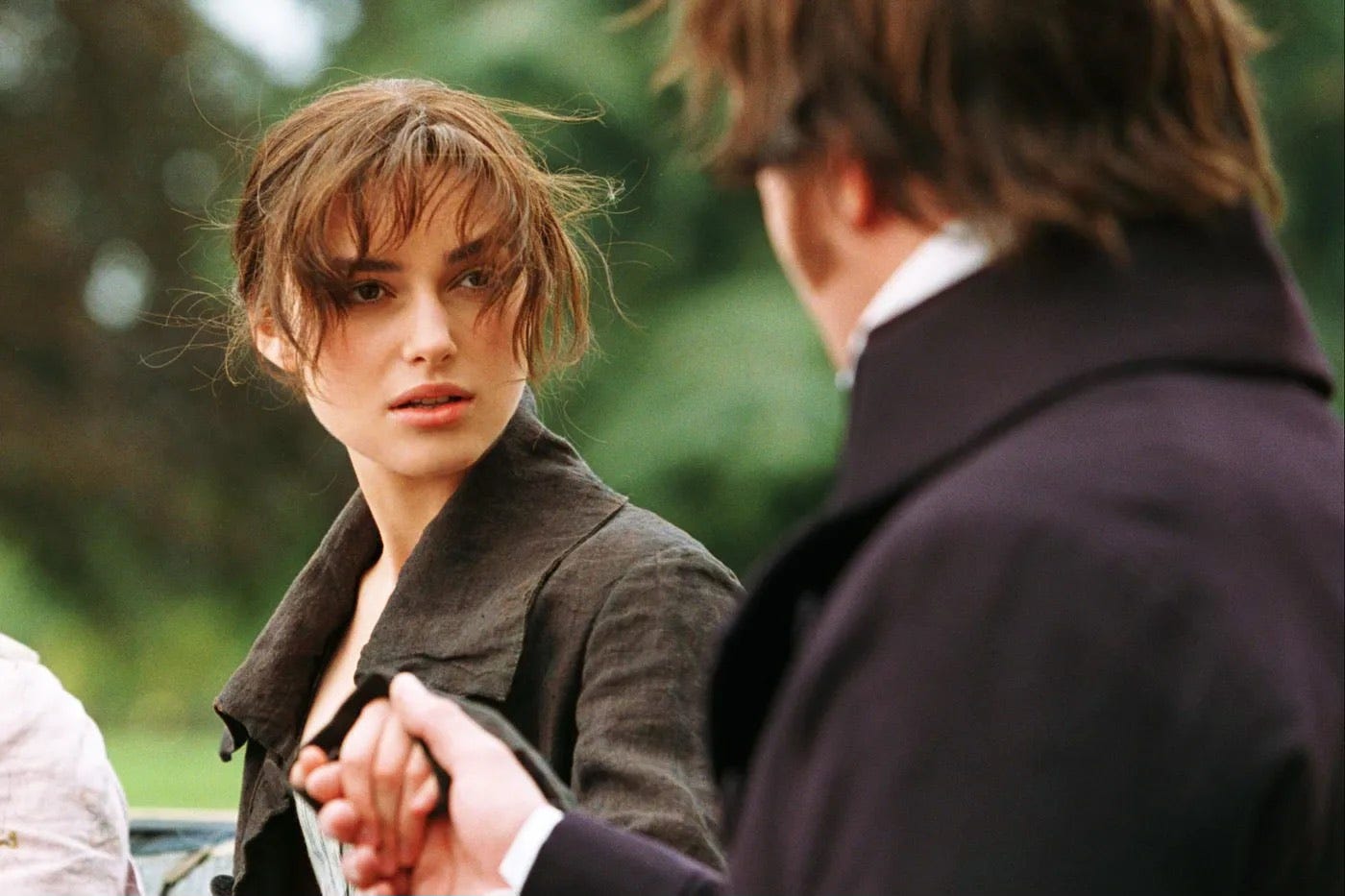
The beauty of these turning points is they create ripple effects. One small change can send the characters on a completely different path… but one that still feels plausible within their world. It’s like winding the clock two minutes differently and watching the entire day unfold in a new pattern.
It also keeps me grounded: I’m not writing a fanfic where Elizabeth Bennet is a modern detective solving Regency crimes. (Although… no. No, focus.)
I’m writing stories that could just, possibly, maybe exist in the cracks and corners of the originals.
Rule Three: Justice for Side Characters (Especially Women)
This one’s personal.
There are so many women in these novels who are sidelined, silenced, or reduced to props in the service of our main couple’s courtship. And while some of that reflects the time these novels were written in, I can’t help but feel the itch to give them voice.
Take Anne Latimer, for instance.
She doesn’t appear in Gaskell’s novel. Lizzy G. was obviously far too busy getting the name of Edith’s son mixed up. And if you blinked during the North and South miniseries, you might have missed her. She was added in as a sort of rival for Margaret, but then… utterly forgotten. No lines. No character development. Not even a vaguely bitter exchange over a tea tray.
In my full-length retelling, Foolish Passions, Anne gets agency, ambition, and (gasp) actual dialogue. She is no longer just a plot device. She is a woman with goals, and yes, probably a slightly inconvenient attraction to John Thornton… but we’ve all been there.
Or take Bertha Mason. Jean Rhys gave her a haunting backstory in Wide Sargasso Sea, but my mind keeps wandering to what happened next… when she was brought to England, when she began to vanish into madness in a cold, alien country and cold, distant husband. There is a Jane Eyre variation stirring in me, I can feel it in my bones.
Anne might be my favourite character in my novel Foolish Passions. She may be a foil, but I made sure she’s a bloody good one! The development of these characters aren’t just side quests. They’re acts of literary reparation.
Rule Four: Drag a Trait to its Furthest Limit
One of my favourite tricks when reimagining characters is to take a single defining trait and push it to its extreme, without breaking the character completely.
Take Darcy, for example. He’s proud, private, aloof.
In my upcoming novel The Secret Portrait of Fitzwilliam Darcy (out this November!), I asked:
What if he wasn’t just private—but practically made of stone? Supernaturally so.
And then I built an entire emotional arc around chiselling away at that marble exterior.
Or John Thornton. In Wild, Strange, Miserable Convenience I gave the world the sweetest, most cinnamon-roll soft-boi Thornton imaginable. Still industrialist, still driven, but also shy, deeply sensitive, and filled with quiet yearning. I honestly don’t think I’ve ever written a gentler man.
By stretching these traits, I get to explore new emotional landscapes while staying true to what makes these characters compelling in the first place. It’s not about reinventing them… it’s about amplifying what’s already there.
Rule Five: Respect the Time Period (Please, I beg you!)
Nothing throws me out of a story faster than a Regency character saying “Hey!”
Or a Victorian household casually preparing for Thanksgiving. In northern England. In 1847 (#TrueStory).
Part of the joy of reading (and writing) period fiction is the fully immersive experience. The language, the customs, the limitations… they’re all part of the world-building. If you drag too many modern ideas into it without care, you break the spell.
This doesn’t mean you can’t write about progressive characters. Austen did. Gaskell certainly did. But they must still sound, act, and think like people of their time, not 21st-century Instagram thirst-traps in empire-line dresses.
My personal method? Read, read, reread and read once more. I keep a running list of period-accurate phrases—often lifted from the books or adaptations— as well as social customs, and historical oddities. I double-check my details.
In Conclusion: Rules for Depth, Not Restriction
Rules can sound limiting, but when working on several different period projects at once, as well as juggling my other writing work, they are liberating! They keep me honest, respectful of the source, and intentional in my storytelling. They remind me that I’m building something with the originals, not in opposition to them.
A good variation isn’t just a remix… it’s a love letter. With plot twists.
And, of course, these rules aren’t universal. I’m sure many other writers break all five gleefully and produce marvellous, chaotic masterpieces... (in fact I know they do, and I’ve loved reading them!) But for me, this structure gives me just enough scaffolding to climb somewhere new… without falling off Pemberley’s roof or getting my hand caught in a cotton loom.
Your Turn
I'd love to know:
What do you love most in period drama variations or retellings?
Are you here for the faithful renditions? The wild “what if”s? The moody glances and morally upright brooding?
Drop a comment, send a raven, or reply to this email. I’d love to hear your rules.
—
Yours in waistcoats and wordplay,
E.G. Hades
P.S. Want to read about the time I almost cried because someone got "Pride and Prejudice" dialogue wrong in a variation? That’s a post for another day…